

💎 Friday Gems (Daily Pocket Notebook Writing, Prompting for More Human Designers, Listening Intelligence, and more)
Every day is a good day.

Hello dear readers,
There is a lot of news about bad things happening to humans by humans every day which can easily bring us down. But there is also goodness around us that lifts our spirits up even in the darkest moments.
If we step back and look at our lives, the people around us, the beauty of the flowers, the grass, the birds chirping, which helps us realize, every day is a good day.
How?
We are alive to experience it.
When we bring our attention to our breath and the the moment we are in we can actually take action. We can change our lives and the lives of others for the better. We can appreciate this one life we have and the new day in front of us and remember that every day is a good day.
On to the this week’s gems!
Today's Gems
Mindfulness: 9 Things to Write in a Pocket Notebook Every Day
The Mindful Designer: Prompting for a Human Designer
Listening: What You’re Listening For (And What You Might Be Missing)
Mindfulness: A Mantra For Anxiety

Mindfulness
9 Things to Write in a Pocket Notebook Every Day

How can we be more present, aware, and intentional in our day instead of rushing from one task to the next?
By noticing and writing daily in a pocket notebook.
I love this idea by Mark Ragland from Myth and Meaning because it helps us notice those things that add meaning to our lives and which we often overlook.
Mark presents a list of things he adds to his notebook such as the weather, sunrise/sunset time, gratitude list, among other things that are important for him and good starting points for anyone. You could also use your own list of things to track and be more aware of throughout the day such as:
one thing that caught your eye
what you ate for breakfast
a highlight of your day
As you start writing daily you will inevitably come up with more ideas to bring more mindfulness into your day.
Source: Mark Ragland in Myth and Meaning
The Mindful Designer
Prompting for a Human Designer
We don’t need quick polished answers by the AI tools, we need designers who will use their judgement, expertise, craft, and skill to question the answers AI provides.
Defending our design decisions because we have more information, more context, and a more human understanding of the problem we are designing for.
Listening
What You’re Listening For (And What You Might Be Missing)

We can notice our filters, experiment with new choices, and adapt our listening to what the moment requires.
Listening isn’t a fixed trait. Like creativity, it’s a skill we can develop and grow. But the first step is to become aware of how we listen.
It turns out that we fall into habits for how we listen, what we pay attention to and what we leave out.
When we have disagreements we’re usually listening for different things, our listening habits are different so we miss what is important for each other which causes breakdowns in communication.
Here is an example of the different types of listeners:
For example, imagine a teammate says, “I’m worried we’re moving too fast. Some people in the group looked uncomfortable, and I don’t think our plan will land the way we want it to.”
A connective listener may pick up first on the relational signal—people looked uncomfortable—and think, Who needs follow-up? What would help people feel safer or more seen?
A conceptual listener may go to possibilities: What’s another way to structure this so it invites more buy-in?
A reflective listener may quietly compare it to past experience and try to make meaning: I’ve seen this dynamic before—what helped then?
And an analytical listener may want clarity and evidence: What exactly tells us we’re moving too fast? What information do we have?
There are no right or wrong listening styles instead think of these as entrypoints into the conversation.
We don’t need to be set in our ways of listening, we can experiment and change things up so we can make the most of our moments together.
When people take time to truly listen, they’re far more likely to act in ways that restore dignity, reduce harm, and strengthen trust.”
Source: Juliana Tafur in The Greater Good
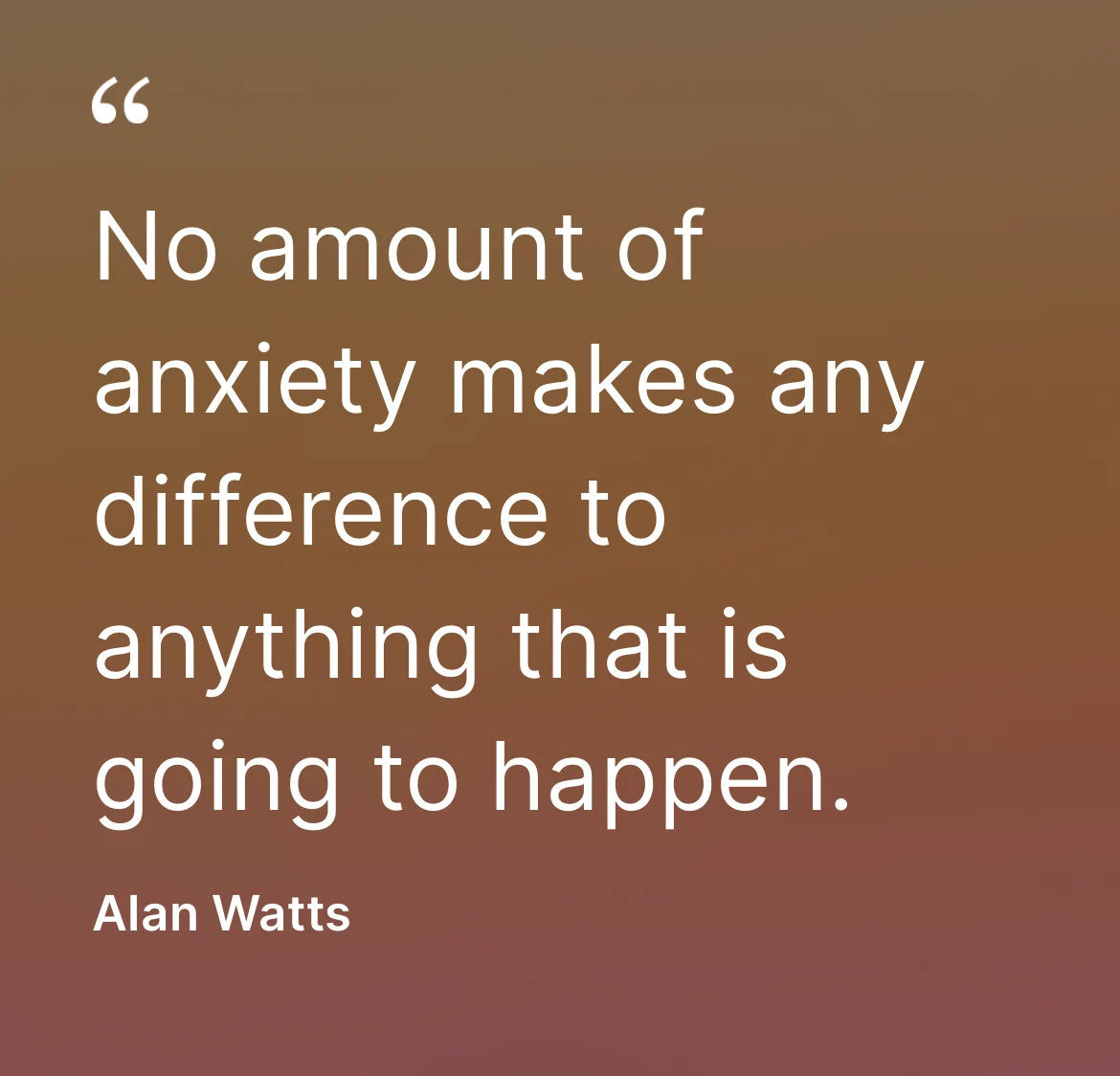
A Mantra for Anxiety

Just this week I sent an email to my client to share some designs and to get their feedback.
Did one of the Friday Gems resonate with you? Please consider commenting, restacking, or sharing it with a friend. This is the simplest and most generous ways to support creative work.
It only takes a moment, but it makes a real difference.❤️
That’s it for this week’s Friday Gems.
In stillness, find your next step.✊🏽
